
Hoonah-Angoon Census Area Death Index
The Hoonah-Angoon Census Area death index covers records from one of Alaska's most remote and culturally rich regions in northern Southeast Alaska. Communities like Hoonah, Angoon, Elfin Cove, and Tenakee Springs are home to deep Tlingit heritage, and searching the death index here often involves both state vital records and Alaska Native community sources. This guide walks you through the key ways to find and access those records.
Hoonah-Angoon Death Index
About This Census Area
Hoonah-Angoon is an unorganized census area, which means it lacks a county-style government with local offices for vital records. There is no local clerk or borough office that stores death certificates. All official death records for residents of this area are held by the state. The Health Analytics and Vital Records Section, or HAVRS, is the only source for certified death certificates here.
The area stretches across a large portion of northern Southeast Alaska, including parts of the Alexander Archipelago. Travel between communities often requires a boat or small plane. That geographic reality has shaped how records were kept over the decades, and it means researchers sometimes need to cast a wider net to find what they're looking for.
Hoonah is the largest community and serves as a practical hub. Angoon, on Admiralty Island, is another well-known village. Elfin Cove and Tenakee Springs are smaller but have been inhabited for well over a century. Records from all these places funnel to the state system.
How to Get a Death Certificate
HAVRS handles all death certificate requests for the Hoonah-Angoon Census Area. You can reach them in Juneau at 5441 Commercial Boulevard, Juneau, AK 99801, by phone at (907) 465-3391, or in Anchorage at 3901 Old Seward Highway Suite 101, Anchorage, AK 99503, (907) 269-0991.
The fee for a death certificate is $30 for the first copy and $25 for each additional copy ordered at the same time. That fee applies whether you order in person, by mail, or online.
Mail orders go to P.O. Box 110675, Juneau, AK 99811-0675. You can also order online through VitalChek at VitalChek Alaska Death Certificates. The HAVRS orders page at health.alaska.gov has full instructions, accepted payment methods, and the required request form.
Records less than 50 years old are restricted. Only eligible requestors such as immediate family members, legal representatives, or those with a documented need can get those. Records 50 or more years old are public and available to any requester.
The HAVRS vital records orders page shows you exactly what to include with your request and how long processing typically takes. Visit the page to get current details before sending anything.
The HAVRS vital records orders page is the official starting point for anyone who needs a certified death certificate from this region.
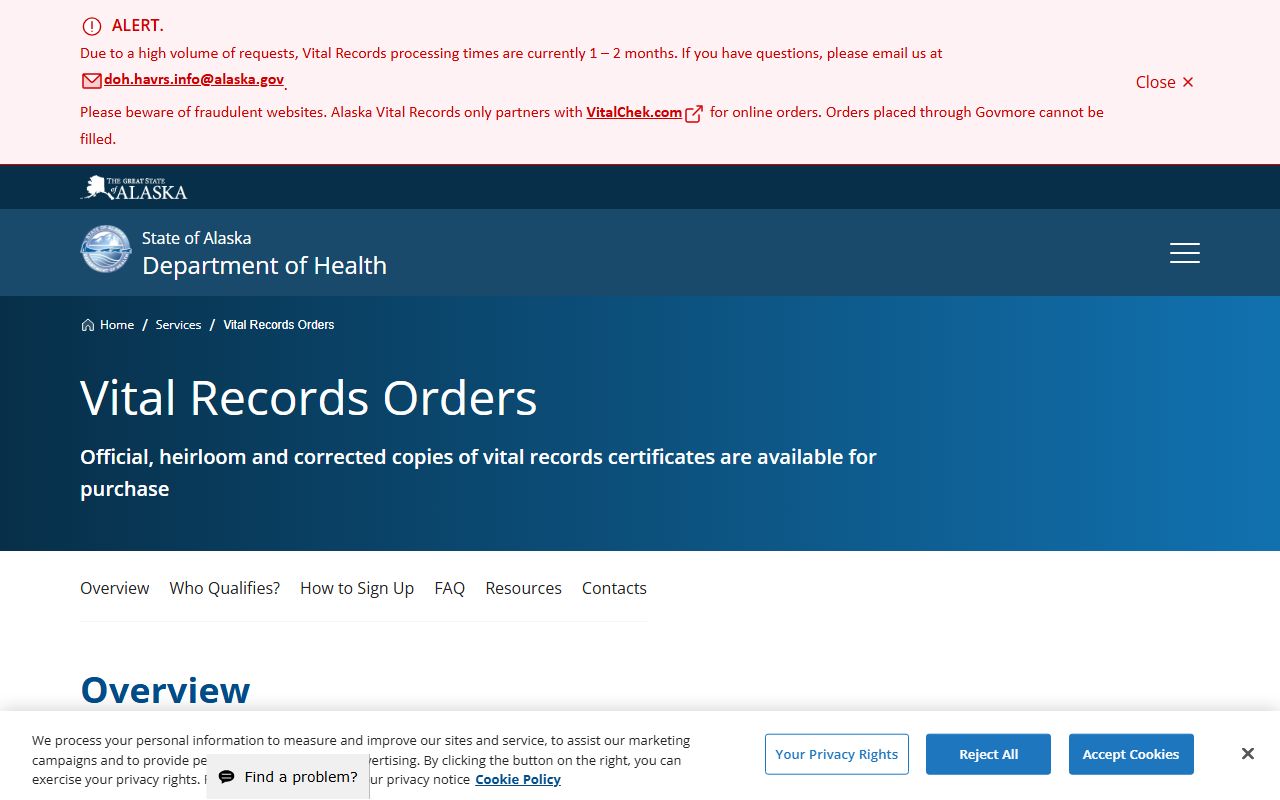
This screenshot shows the HAVRS orders portal where you can submit requests for death certificates from the Hoonah-Angoon Census Area and all other parts of Alaska.
Local Resources in Hoonah-Angoon
The City of Hoonah maintains municipal services for the largest community in the census area. While the city does not hold vital records, the city clerk handles local administrative matters and can sometimes point researchers toward the right state or community contacts.
The City of Hoonah's website provides contact details, public meeting records, and information on municipal services. If you're trying to confirm a person's connection to the Hoonah community or find local business records, the city office is a reasonable first stop.
The City of Hoonah website is a useful starting point for anyone researching community ties or looking for local contacts who might help with historical record searches.
For smaller communities like Angoon, Elfin Cove, and Tenakee Springs, there are no formal local government offices that maintain records. Community organizations and tribal offices sometimes hold informal family and community records, but these are not official vital records. For anything legally certified, HAVRS is the only route.
Alaska Native and Historical Records
The Tlingit people have called this region home for thousands of years. Many families in Hoonah-Angoon have genealogical records tied to Alaska Native corporations, clan traditions, and tribal records rather than (or in addition to) state systems. This can make research both richer and more complex.
Alaska Native corporation membership records, tribal enrollment documents, and clan histories are not part of the state death index system. But they can fill in gaps that official records leave open, especially for deaths that occurred before the state registration system was well established.
The Alaska State Archives holds historical records for the entire state, including territorial-era documents from this region. Records may include Alaska Native community records, missionary records, and documentation from the territorial period before Alaska became a state in 1959.
The Alaska State Archives genealogy page covers records from 1816 through 1998 and includes roughly 1.1 million digitized documents. Some of these have direct relevance to communities in the Hoonah-Angoon area.
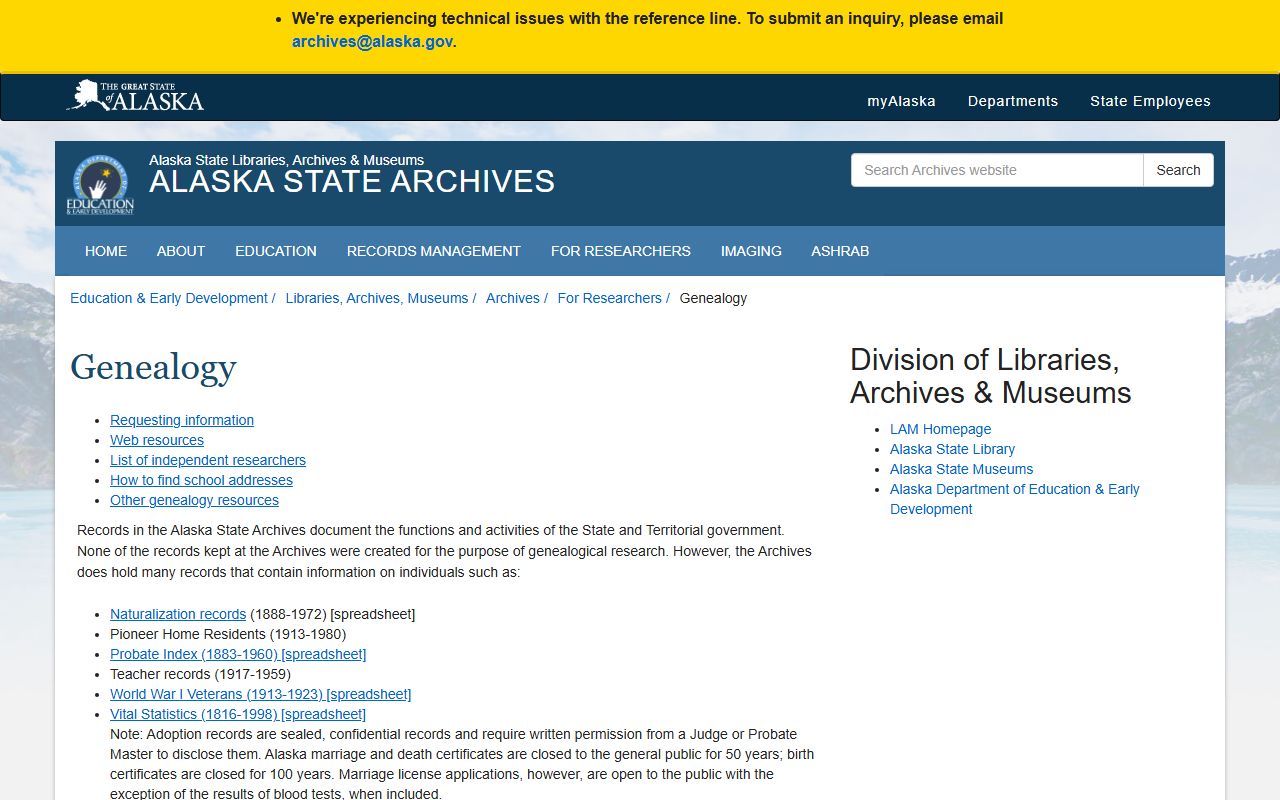
The Alaska State Archives genealogy resources include records from the territorial period and earlier, which can be especially useful for tracing family histories in remote Southeast Alaska communities.
FamilySearch also maintains digitized Alaska records and is a free option worth checking. Research in this area may require accessing Alaska Native corporation records alongside state vital records, since many families have connections to both systems.
State Vital Statistics Law
Alaska's death registration system is governed by the Vital Statistics Act. This law sets the rules for who can access records, how they are maintained, and what counts as an eligible requester for restricted records.
The act is found at Alaska Title 18, Chapter 50. It covers definitions, registration requirements, and the conditions under which records become public. Knowing what the law says can help you understand why a record might be restricted and what you need to provide to request it.
For veteran families, there is a provision under Alaska law that allows eligible veterans or their family members to obtain a free certified death certificate. Details on this benefit are available through the Alaska Legislature's bill text at HB 99B. This applies regardless of which part of the state the veteran lived in, including the Hoonah-Angoon Census Area.
The CDC also maintains a guide to obtaining Alaska vital records, including death certificates, at cdc.gov/nchs/w2w/alaska.htm. That page is a useful secondary reference if you're unsure of the process or want to compare the official steps.
Genealogy Research Tips
Searching the death index for someone from the Hoonah-Angoon area takes a bit more work than it might in a more urbanized part of the state. Here are a few practical steps that help.
Start with the Alaska State Archives. Their digitized collection at archives.alaska.gov covers records from 1816 to 1998 and is the largest single source for historical Alaska vital records. The search tools are free to use.
Check the Alaska State Library at library.alaska.gov. The library holds genealogical collections that include newspaper indexes and other reference materials for Southeast Alaska. Staff can assist with remote research requests.
If the person you're researching was Alaska Native, consider reaching out to Sealaska Heritage Institute or the relevant Alaska Native corporation. These organizations sometimes have family and community records that don't exist in any state database. They aren't part of the official death index, but they can be invaluable for genealogical work.
For more recent deaths, newspaper obituaries are often the fastest way to confirm basic facts before ordering a certified certificate. The Juneau Empire covers much of Southeast Alaska and maintains an online archive of past issues.
Nearby Boroughs and Census Areas
Cities in Hoonah-Angoon Census Area
The Hoonah-Angoon Census Area includes several communities, among them Hoonah, Angoon, Elfin Cove, and Tenakee Springs. None of these communities currently have dedicated city-level death index pages on this site, but all death records for residents of this census area are available through HAVRS using the contact and ordering information above.