
Valdez Death Index Search
Valdez is a home rule city in the Chugach Census Area on Prince William Sound, and death index records for this community are registered and maintained through the Alaska Health Analytics and Vital Records Section. Researchers tracing deaths in Valdez can request official death certificates through HAVRS and may also draw on resources from the Valdez Museum and Historical Archive, the Alaska State Archives, and FamilySearch for historical records going back to the territorial era.
Valdez Death Index
How Death Records Work in Valdez
Valdez has its own municipal government as a home rule city, but the city does not issue death certificates. That function belongs to HAVRS at the state level. When a death occurs in Valdez, the physician, coroner, or medical examiner prepares the death certificate and files it with HAVRS for registration. The City of Valdez maintains local administrative records through the City Clerk, but those are separate from vital records and cannot be used as substitutes for official death certificates.
Once HAVRS registers a death certificate, it enters the statewide death index. The certificate contains the full legal name of the deceased, date and place of death, cause and manner of death, and personal details. This is the authoritative record of the death. Certified copies of this record are what courts, title companies, and financial institutions require when closing an estate.
Alaska law restricts access to death records based on age. Records less than 50 years old are available only to immediate family members, legal representatives, and individuals with a documented personal or property interest. Records 50 years old or older are open to the public. As of 2026, the publicly accessible period covers deaths from 1976 and earlier. The same rules apply in Valdez as everywhere else in Alaska.
Requesting Death Certificates from HAVRS
HAVRS has offices in Juneau at 5441 Commercial Boulevard, Juneau AK 99801, phone (907) 465-3391, and in Anchorage at 3901 Old Seward Highway, Suite 101, phone (907) 269-0991. For Valdez residents, the Anchorage office is the closer option. Online ordering through VitalChek is also available and does not require travel to either office.
To request a death certificate, you need the full legal name of the deceased and the approximate date of death. For records within the restricted 50-year window, you also need documentation of your eligibility. This might be a birth certificate showing a parent-child relationship, a marriage certificate, or a probate court order. The fee is $30 for the first certified copy and $25 for each additional copy ordered at the same time.
The HAVRS vital records ordering page has the current request forms, accepted forms of identification, and payment instructions. The page also explains the eligibility requirements in detail and lists which categories of requesters qualify for restricted records.
The Valdez Museum and Historical Archive holds collections that document Valdez history from the gold rush era through the present, including the 1964 Good Friday earthquake and the pipeline construction period.
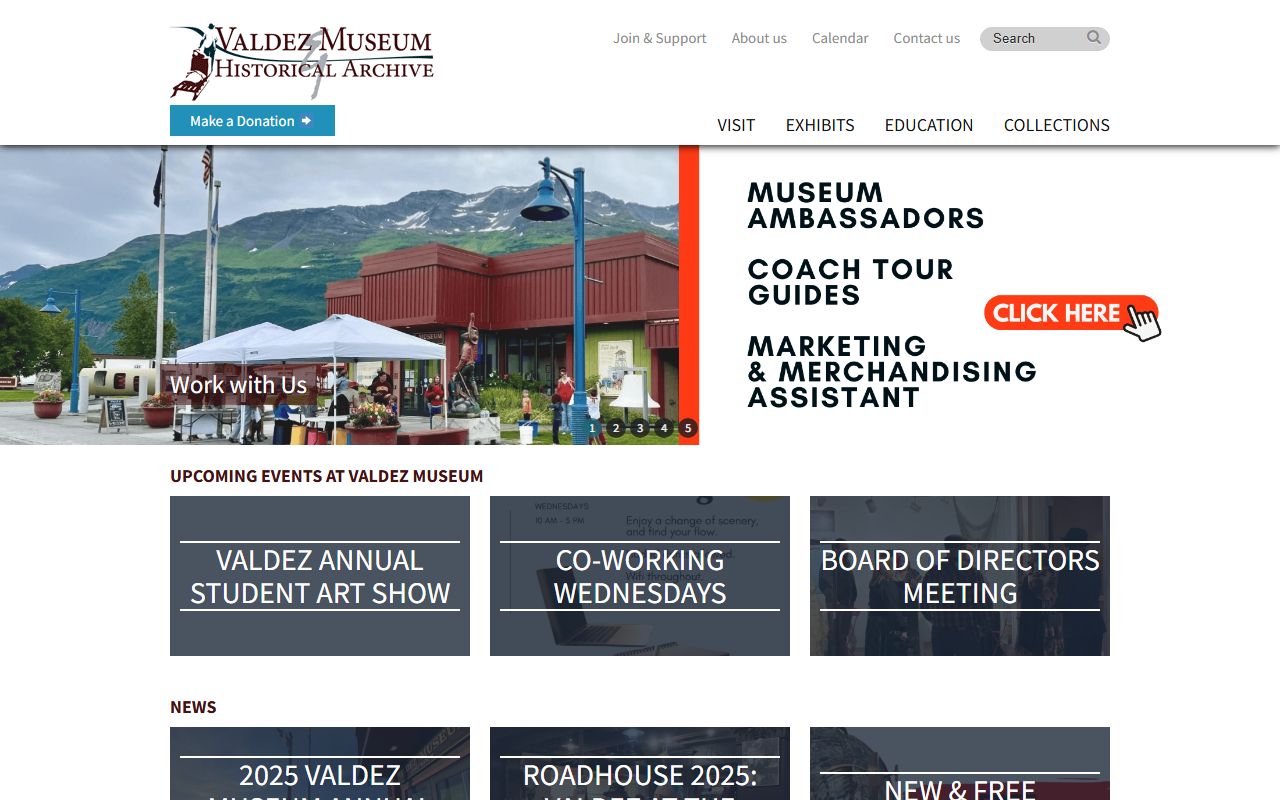
For researchers looking into historical deaths in Valdez, the museum's photograph collections, oral histories, and documentary archives can provide context and detail beyond what official vital records contain.
Valdez History and the Chugach Census Area
Valdez has a distinctive administrative history. The original townsite was destroyed by the 1964 Good Friday earthquake and subsequent tsunamis. The city was relocated to its current site on more stable ground. This relocation means that some historical records, including those related to deaths before 1964, may reference an address or location that no longer corresponds to the modern city layout. Researchers should be aware that pre-earthquake records use the old townsite as the place of death or residence.
Valdez's position as the southern terminus of the Trans-Alaska Pipeline System brought a large influx of workers during the construction era of the 1970s. Many of these workers came from other states and did not have permanent ties to Valdez. Deaths during that period may have resulted in certificates being filed in Alaska even for people whose families were elsewhere. The HAVRS death index covers all deaths registered in Alaska regardless of the deceased's home state.
The Chugach Census Area itself was created in 2019 when Valdez withdrew from the former Valdez-Cordova Census Area. The area does not have a borough-level government. For property records and related administrative matters, residents deal with either the city government or state agencies. There is no Chugach Census Area office that maintains local vital records or probate filings.
Alaska State Archives and Historical Research
The Alaska State Archives in Juneau is the primary repository for state and territorial records that are no longer in active agency use. Their genealogy collection includes a wide range of record types from across Alaska, including materials relevant to the Prince William Sound and Valdez region. For deaths that occurred in the territorial era or early statehood period, the Archives may hold records that HAVRS does not.
The Alaska State Archives genealogy collection provides access to historical records from across the state, including early vital records and other documents relevant to Valdez-area research.
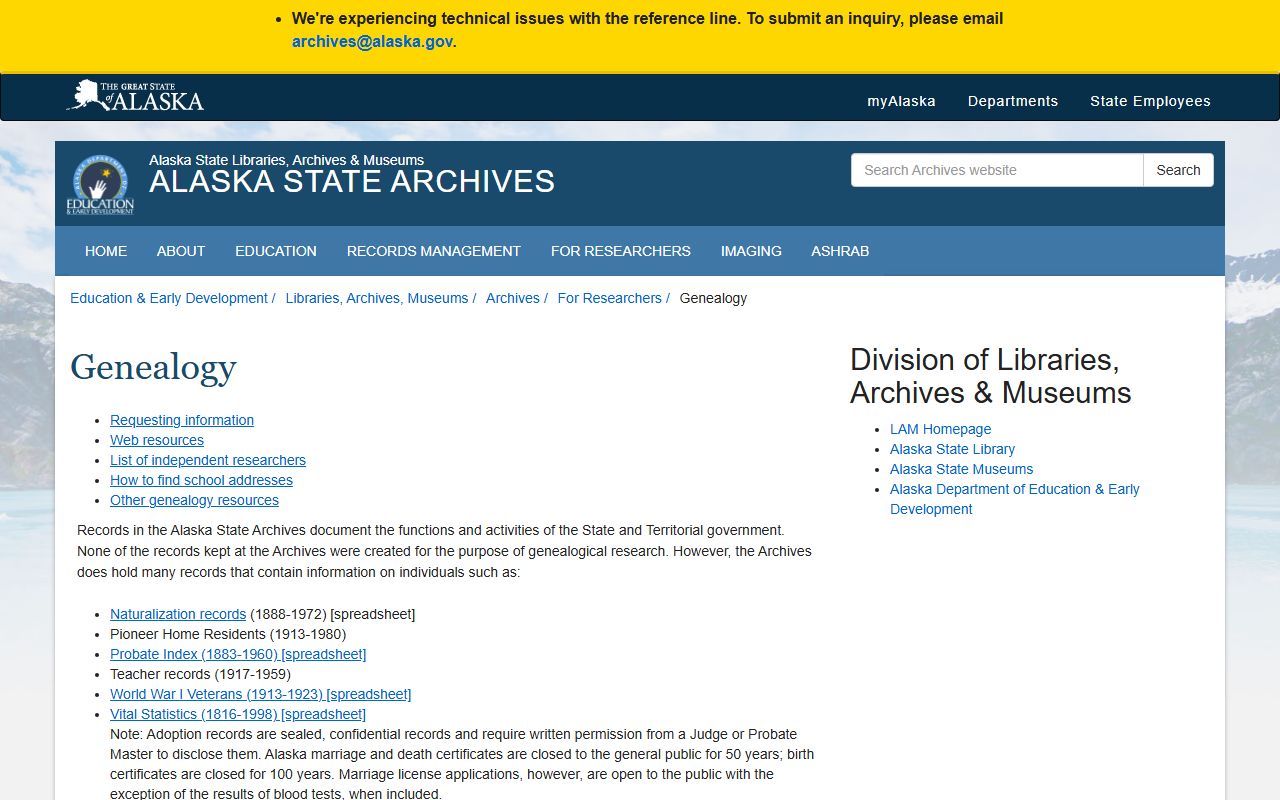
Researchers should contact the Archives directly or review their online finding aids to identify which collections might contain records relevant to deaths in the Valdez area.
FamilySearch holds Alaska Vital Records covering 1816 through 2005 and also has territorial court records for areas that include the Valdez district. These collections are free to search and can provide leads on deaths that occurred before the modern vital registration system was well established. The gold rush era brought many people through Valdez as a gateway to the Interior, and some of those individuals appear in early territorial records now digitized on FamilySearch.
Vital Statistics Act and Access Rights
Alaska's vital records system is governed by the Vital Statistics Act, Title 18, Chapter 50 of Alaska Statutes. This law defines what information a death certificate must contain, who is responsible for filing it, how HAVRS maintains the records, and who can access them. Understanding this framework helps researchers know what to expect when they submit a request.
The statute distinguishes between certified copies, which have legal force and are accepted by courts and government agencies, and informational copies, which are for research purposes and may carry a notation that they cannot be used for legal purposes. Most researchers and family members need certified copies. Genealogists working with older, publicly accessible records can often use informational copies.
When HAVRS receives a request for a restricted record, staff review the documentation and make a determination about eligibility. If the request is denied, the requester has options to appeal or to provide additional documentation. HAVRS staff can explain the process and what additional materials might support a request that initially lacks sufficient documentation.
Other Sources and Supporting Records
The Valdez Star and other regional newspapers have historically covered the Prince William Sound area. Obituaries in these papers can provide biographical detail not found in official records. Many older newspaper issues have been digitized and are accessible through the Alaska State Library or newspaper archive services. For more recent deaths, online obituary platforms often have current postings from Valdez-area funeral homes.
Probate records for Valdez decedents are filed with the Alaska Superior Court serving the area. These filings are public record once submitted to the court and can identify heirs, estate assets, and other details useful for both legal and genealogical research. Researchers who need probate information should contact the court clerk to ask about current procedures for accessing those files.
Social Security Death Index data covers individuals who paid into the Social Security system and whose deaths were reported to the Social Security Administration. This index is searchable through several genealogy platforms and can confirm approximate dates of death for individuals whose official death certificates may be harder to access due to the 50-year restriction.
Veterans who die in Alaska may be eligible for special death certificate recognition under state legislation. Alaska HB 99 outlines the current framework for this program. Families of qualifying veterans should ask HAVRS staff about this option when they contact the office. National Archives military records can also supplement the death certificate with service history and related documentation.
The CDC Alaska vital records page and the Alaska State Library genealogy resources page both provide useful links and context for researchers working with Valdez death records. The State Library's finding aids can help identify digitized collections specific to the Prince William Sound region.