
Anchorage Death Index Records
Anchorage holds the largest share of Alaska's death records, and searching the death index here gives you access to vital records from Alaska's most populous city. Whether you need a certified death certificate for legal use or historical records for genealogy research, this guide covers the main sources, offices, and databases that serve the Anchorage area.
Anchorage Death Index
Alaska Bureau of Vital Statistics - Anchorage Office
The Alaska Bureau of Vital Statistics maintains a walk-in office in Anchorage at 3901 Old Seward Hwy Suite 101, Anchorage AK 99503. The phone number for this location is (907) 269-0991. Staff are available Monday through Friday, 8:30 a.m. to 4:30 p.m. Walk-in requests can often be filled the same day, which is an advantage the Anchorage office has over the mail-in process.
This office is part of the Health Analytics and Vital Records Section (HAVRS), the state agency that manages Alaska's vital records. Death records are kept at the state level, not the municipal level, so there is no separate "Anchorage" death certificate office. All records go through HAVRS. The Anchorage location simply provides easier in-person access for residents in Southcentral Alaska.
Death records less than 50 years old are restricted. You must show that you have a direct interest to get a certified copy. That means being a spouse, parent, child, sibling, or legal representative of the deceased. Records 50 years old or older are considered public and can be requested by anyone. The first certified copy costs $30. Each extra copy ordered at the same time costs $25.
You can also order online through VitalChek, which is the authorized third-party ordering service for Alaska vital records. Mail requests go to P.O. Box 110675, Juneau AK 99811-0675. The HAVRS orders page at health.alaska.gov has current forms and instructions.
Anchorage Genealogical Society
The Anchorage Genealogical Society is one of the most useful local resources for death index research in the city. The society maintains several indexes that are not available anywhere else. These include the Anchorage Times Obituaries Index covering 1915 to 1980, the Anchorage Obituary Index for 1991 through 1995 and 1996 through 2000, and the Anchorage Daily News Obituary Index spanning 2001 to 2007. These indexes let you search by name and locate the original newspaper obituary, which often contains details not found in the official death record.
The society also compiled a Cemetery Book that indexes burials in Anchorage-area cemeteries. This is useful for tracing family lines and confirming death dates when official records are incomplete or restricted. The society's library is housed at the Loussac Library in Anchorage and is open to the public. You can also contact the society by mail at P.O. Box 212265, Anchorage AK 99521.
The Anchorage Genealogical Society website shows their current meeting schedule, research aids, and how to access their indexed collections. Volunteers can often help you navigate both local and statewide records systems. If you're stuck on an Anchorage death record, reaching out to the society is a good next step.
The Anchorage Genealogical Society's online resources and obituary indexes are a strong starting point for death research in the city.
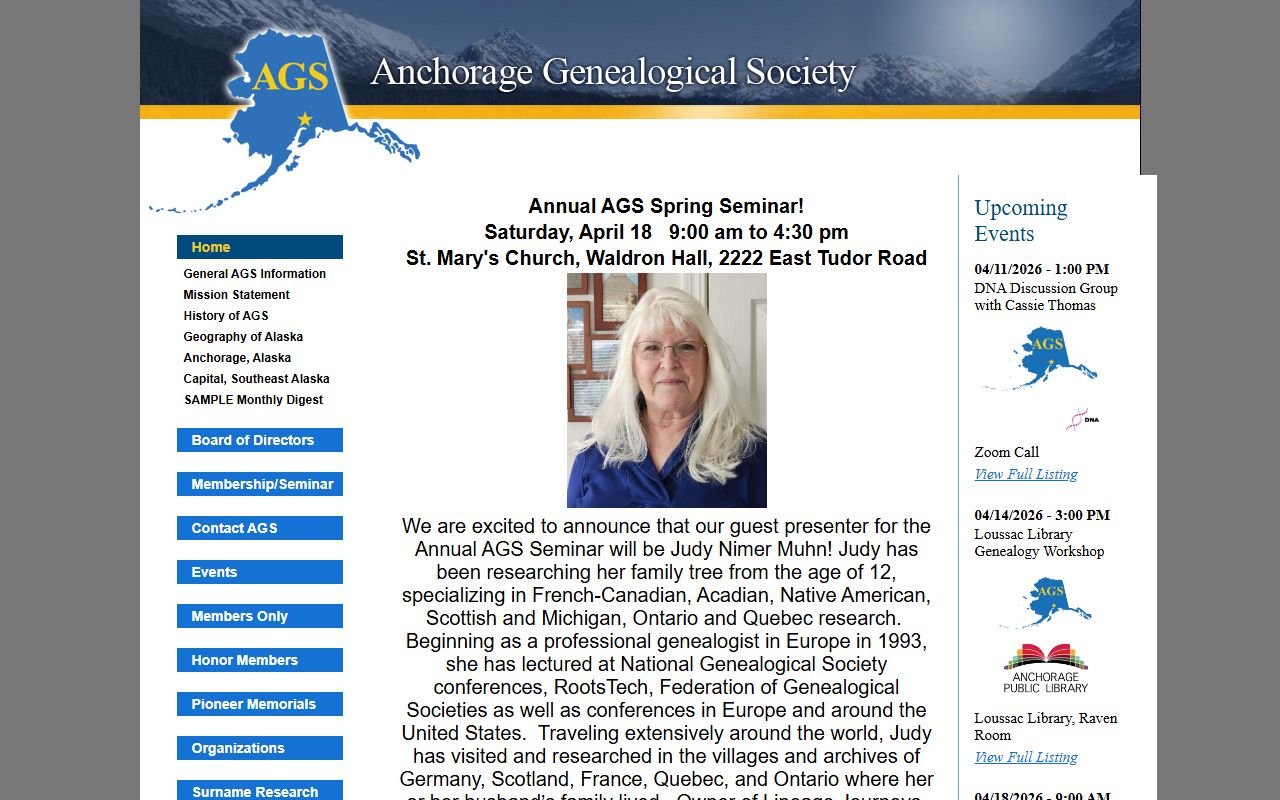
The society's website links to indexed obituaries and cemetery records that cover over a century of Anchorage history.
Anchorage Public Library Alaska Collection
The Anchorage Public Library holds an Alaska Collection that includes several death-related resources. The library maintains the Anchorage Obituary Index from 1981 to 2001, making it a bridge between the genealogical society's collections and more recent records. Staff in the Alaska Collection can help you use these resources and locate microfilm copies of historical newspapers.
The library also holds the Anchorage High School Yearbook Index covering 1917 to 1978. Yearbooks are sometimes used to establish dates of birth and death for individuals who are difficult to trace through official records. They can also help confirm identity when working with common names.
The library's Alaska Collection is a free public resource. You do not need a library card to use in-house materials, though you will need one to borrow items or access some digital databases remotely.
The Anchorage Public Library's digital and physical collections complement what HAVRS provides for official death certificates.
The library's Alaska Collection holds obituary indexes, yearbooks, and historical newspapers that support death record research across Anchorage.
Anchorage Municipal Cemeteries
The Municipality of Anchorage maintains several cemeteries through the Parks and Recreation Department. The Anchorage Memorial Park Cemetery has a Master Burial List that can be searched by last name. This list includes burial dates and plot locations, which can help confirm death records or provide a starting point when you don't know the exact date of death.
Cemetery records are not official vital records and don't carry the same legal weight as certified death certificates. But they are often easier to access, especially for older deaths. If someone died in Anchorage decades ago, the burial list may be the fastest way to confirm the death date and then request the appropriate certificate from HAVRS.
The municipality's parks department manages the cemetery records. For burials at Anchorage Memorial Park, you can contact the parks office directly at the number on the municipality's website. Some older burial records have been digitized and are available through the library or genealogical society collections described above.
Alaska Native Medical Center Records
The Alaska Native Medical Center (ANMC) is a major hospital in Anchorage that serves Alaska Native and American Indian people from across the state. Deaths that occur at ANMC are reported to HAVRS, and the death certificates are maintained in the same statewide index as all other Alaska deaths. There is no separate index for deaths at ANMC.
Medical records held by the facility are governed by federal health privacy rules. These are separate from vital records and require a different process to access. If you need medical records from ANMC related to a deceased person, you would contact the hospital's medical records department directly. For the official death certificate, the request goes to HAVRS through the standard process.
ANMC's role matters for genealogical research because many Alaska Native individuals who lived in rural parts of the state may have died in Anchorage at ANMC. The death record would be filed in Anchorage even if the person's home community was hundreds of miles away. Keep that in mind when searching for records of relatives from rural Alaska villages.
Alaska State Archives and Additional Sources
For historical death records, the Alaska State Archives holds coroner's inquests from 1898 to 1969 and probate records from 1883 to 1960. These records cover deaths that occurred in the Anchorage area during the territorial and early statehood period. The State Archives is in Juneau, but many records can be requested by mail or through the archives' reference staff.
The CDC's Where to Write page for Alaska is a helpful reference if you're requesting records from outside the state. It confirms the current mailing address for HAVRS and lists what information you need to include in a request.
The Alaska State Library's genealogy page lists additional databases and finding aids that cover Anchorage and the broader state. This page is maintained by library staff and updated when new resources become available. It's worth checking if you've exhausted other sources.
Alaska's Vital Statistics Act sets the rules for access to death records across the state. You can read the full text at Justia's Alaska statute page. The law covers who can request records, what information must appear on a certificate, and how long records are kept.