
Eagle River Death Index
Eagle River death index records are maintained through the Municipality of Anchorage and the Alaska Bureau of Vital Statistics, with certified death certificates issued by the state Health Analytics and Vital Records Section (HAVRS). This community sits along the Glenn Highway in the Chugiak-Eagle River area and is part of the Municipality of Anchorage, meaning all official vital records requests follow the same process used by Anchorage residents. Whether you need records for genealogy research, legal matters, or personal documentation, this page covers every access point available for Eagle River death index records.
Eagle River Death Index
Municipality of Anchorage Vital Records
Eagle River is not an independent city. It functions as a community within the Municipality of Anchorage, which means all vital records services go through municipal and state channels rather than a separate local government. The Anchorage HAVRS office at 3901 Old Seward Highway Suite 101, Anchorage AK 99503, handles walk-in requests Monday through Friday, 8:30 a.m. to 4:30 p.m. Same-day service is available for in-person visits. The phone number for the Anchorage office is (907) 269-0991.
The Municipality of Anchorage covers a broad geographic area that includes Eagle River, Chugiak, and other communities in the northern portion of the municipality. Death records filed in Eagle River follow the same state reporting chain as all Alaska deaths: the attending physician or coroner completes the certificate, the funeral home files it with HAVRS, and HAVRS maintains the official record. You can learn more about municipal services at www.muni.org.
The Anchorage HAVRS office provides same-day turnaround for in-person requests. Mail and online orders take longer. If you need a certificate quickly and can travel to Anchorage, the Old Seward Highway office is your fastest option for Eagle River records.
The Municipality of Anchorage website includes information on local services and community council areas. The image below shows the MOA portal, which can help you find the right department for your request.
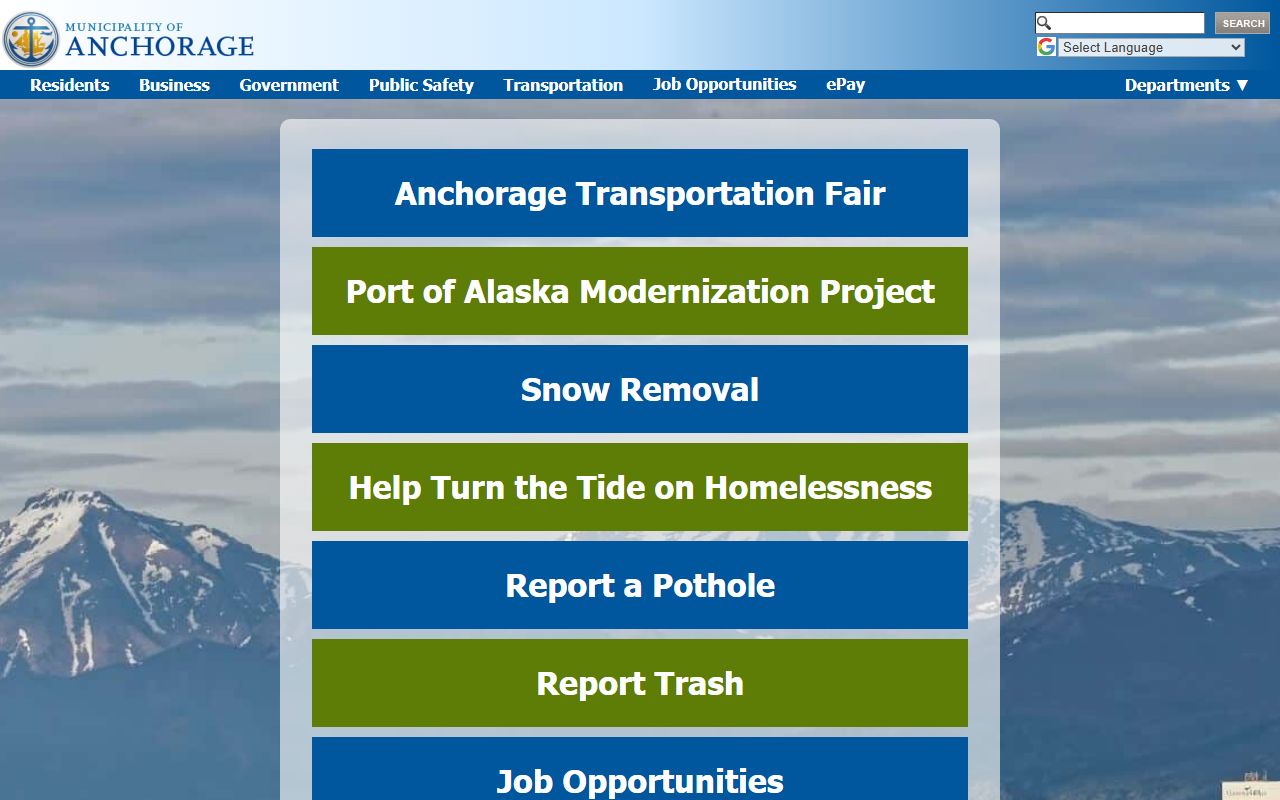
The municipal site covers the full range of services for all communities within the MOA, including Eagle River and Chugiak. From there you can find contact details for specific departments.
Ordering Through HAVRS
The state Health Analytics and Vital Records Section is the only agency that can issue certified Alaska death certificates. For Eagle River records, you have three ways to order: in person at the Anchorage office, by mail to the Juneau headquarters at 5441 Commercial Boulevard, Juneau AK 99801, or online through VitalChek.
The fee is $30 for the first certified copy. Each additional copy ordered at the same time costs $25. Records less than 50 years old are restricted. Only eligible parties can get a certified copy of a recent death certificate. Those eligible include a spouse, parent, adult child, sibling, legal guardian, or someone who can show a direct and tangible interest. Records 50 years old and older are available to the general public without showing eligibility.
Online orders go through the VitalChek platform at vitalchek.com. VitalChek charges a service fee on top of the state fee. You can also download a mail-in order form from the HAVRS page at health.alaska.gov/en/services/vital-records-orders/ and send it with a check or money order. When submitting by mail, include a copy of your government-issued photo ID and a signed statement of your relationship to the deceased.
Processing times vary by order method. In-person requests at the Anchorage office are handled the same day. Mail orders typically take two to four weeks. Online orders through VitalChek are handled as mail orders on the HAVRS end, so processing time is similar. Plan ahead if you need a certificate for legal or estate purposes.
Genealogy and Historical Records
The Alaska State Archives in Juneau holds territorial-era records that can be useful for Eagle River area research. Pre-statehood death records, cemetery transcriptions, and early administrative documents from the Anchorage area are part of the archives collection. You can search the catalog and request records through archives.alaska.gov/genealogy/genealogy.html.
The Alaska State Archives page below is a useful starting point for historical death research covering the Eagle River and greater Anchorage area.
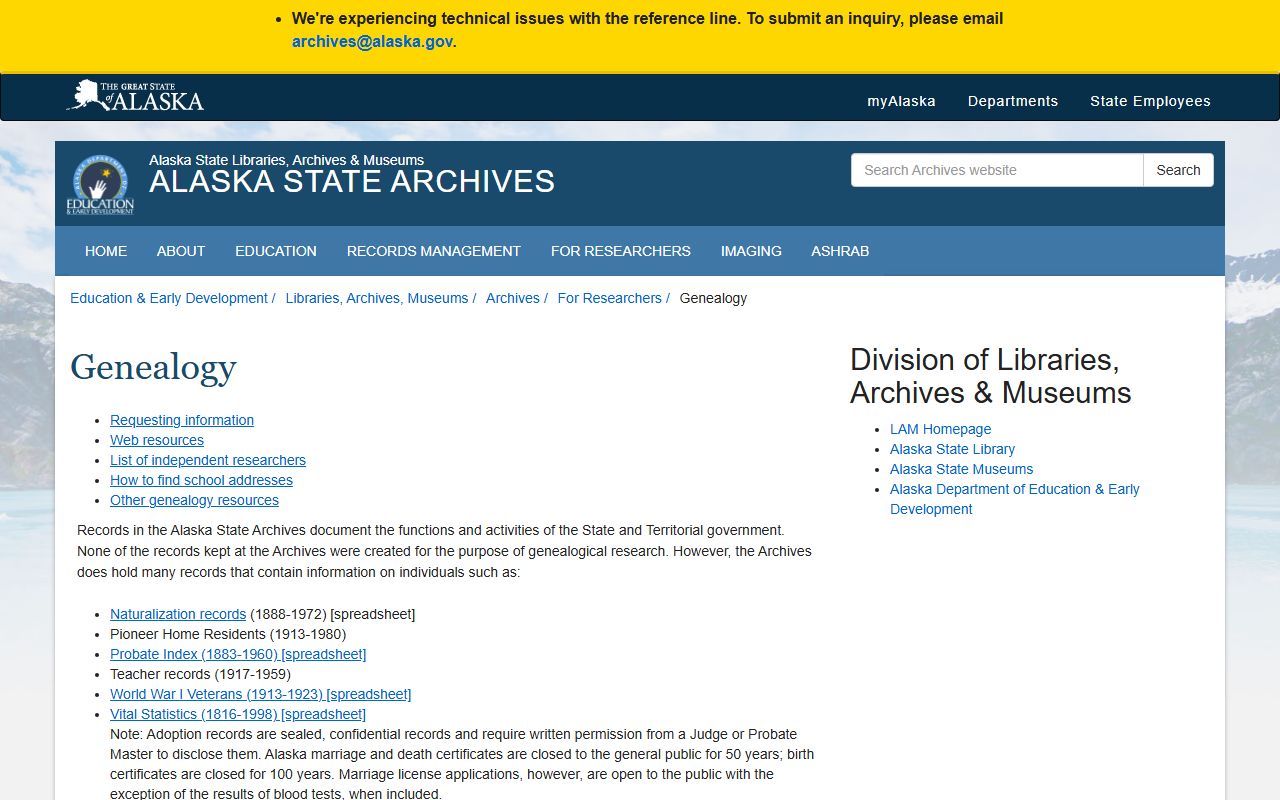
Through the archives you can find records dating back to the territorial period, including some that have not yet been digitized and require written requests for access.
The Anchorage Genealogical Society at anchoragegenealogy.org maintains research resources that cover the greater Anchorage area, including Eagle River. The society has compiled obituary indexes and other finding aids useful for tracking down death information from earlier decades. Members have access to additional databases and can assist with research requests.
The Anchorage Public Library at www.anchoragelibrary.org holds the Alaska Collection, which includes cemetery records, obituary indexes, and historical materials related to the Eagle River and Chugiak communities. Library staff can help with genealogical research during regular hours. Many items in the Alaska Collection are available only in the library and cannot be borrowed, so an in-person visit is often necessary for detailed research.
The Chugiak-Eagle River Star newspaper serves both communities and maintains archives of obituaries published in its pages. The newspaper has covered local deaths and memorials for decades, making its archives a practical source when you know approximately when a death occurred. Check www.chugiakeagleriverstar.com for current availability, noting that the site may be temporarily unavailable at times.
What the Death Index Contains
The Alaska death index includes records filed with HAVRS since statehood in 1959. Each entry typically shows the decedent's full name, date of death, place of death, and a certificate number that can be used to order a certified copy. The index itself does not include cause of death or next-of-kin information; those details appear on the full certificate.
For Eagle River deaths, the place of death field will often list Anchorage as the location since Eagle River is within the Municipality of Anchorage. Some records may list Eagle River specifically, depending on how the certificate was completed. When searching the index, try both the community name and Anchorage to make sure you find all relevant records.
Deaths occurring before 1959 fall under territorial records, which are held by the Alaska State Archives. Territorial death registration was less consistent than modern record-keeping, so some early deaths may not have a formal certificate on file. Cemetery records, church registers, and newspaper archives can fill in gaps for research in the pre-statehood period.
The CDC's National Center for Health Statistics also collects Alaska mortality data. Their page for Alaska at cdc.gov/nchs/w2w/alaska.htm provides links to state-level data and statistical information. This resource is primarily useful for aggregate data rather than individual record lookup.
Legal Framework and Access Rules
Alaska's Vital Statistics Act governs how death records are created, maintained, and accessed. The Act is codified in Alaska Statutes Title 18, Chapter 50. You can read the full text at law.justia.com/codes/alaska/title-18/chapter-50/. The Act sets out who can request certified copies, what fees apply, and how long restricted records remain closed to the public.
The 50-year rule is the key threshold. Once a death record is more than 50 years old, it becomes available to any member of the public without a showing of eligibility. Before that threshold, you must demonstrate a direct interest. This rule applies uniformly across Alaska, including for Eagle River records filed under the Municipality of Anchorage.
Informational copies, sometimes called non-certified copies, are available for research purposes but cannot be used for legal or official purposes. They do not carry the state seal and are not accepted as proof of death by courts, insurance companies, or government agencies. If you need a copy for legal use, request a certified copy.
The Alaska State Library at library.alaska.gov/public/akgene.html offers additional genealogical resources and guidance on navigating Alaska records. The library's resources include guides to using HAVRS, the archives, and secondary sources for Alaska family history research.