
Find Kodiak Death Records
Kodiak is the main city on Kodiak Island and one of the largest commercial fishing ports in the United States, with a population rooted in a mix of Alaska Native Alutiiq heritage, Russian colonial history, and generations of fishing families. Death records for Kodiak and the Kodiak Island Borough are issued by the Alaska Bureau of Vital Statistics through the Health Analytics and Vital Records Section (HAVRS), and the unique history of the island means that researchers often need to look beyond standard state vital records to find complete information about their ancestors.
Kodiak Death Index
Kodiak Death Certificates Through HAVRS
All Alaska death certificates are state records. The City of Kodiak and the Kodiak Island Borough do not issue death certificates. When a death occurs on Kodiak Island, the attending physician or medical examiner files the certificate with HAVRS in Juneau. HAVRS then holds the record and issues certified copies upon authorized request.
HAVRS has two offices. The Juneau headquarters is at 5441 Commercial Boulevard, Juneau AK 99801, phone (907) 465-3391. The Anchorage office is at 3901 Old Seward Highway, Suite 101, phone (907) 269-0991. Kodiak is accessible by air and ferry but not by road, so most residents order death certificates by mail or online through VitalChek rather than visiting a state office in person.
The fee for a certified copy is $30 for the first copy. Each additional copy of the same certificate ordered at the same time costs $25. Payment can be made by credit card through VitalChek or by check or money order if you order by mail. Orders through VitalChek are typically processed faster than mail orders.
The City of Kodiak's City Clerk office at (907) 486-8640 handles local administrative records and business licensing. They do not hold vital records. You can find general city information at the City of Kodiak website, though for a death certificate you will need to go directly to HAVRS.
Who Can Access Kodiak Death Records
Alaska law restricts death records for 50 years after the death. During that period, only immediate family members, legal representatives, and others with a documented interest can get certified copies. After 50 years, records become public and anyone can request them.
To get a restricted record, you need to provide proof of your relationship to the deceased. Acceptable documents include a birth certificate showing parent-child relationship, a marriage certificate for a surviving spouse, or legal paperwork showing you represent the estate. HAVRS reviews each request individually and can ask for additional documentation if what you submit is not clear enough to establish eligibility.
For researchers working on Kodiak family histories, the 50-year rule means that deaths before roughly the mid-1970s are now open records. Given Kodiak's long history as a settled community, going back through Russian colonial times, there is a substantial range of historical deaths that fall into the unrestricted category. Those records can be requested without showing any family connection.
Alutiiq Heritage and Cultural Records
Kodiak has been home to the Alutiiq people for thousands of years. Russian traders and missionaries arrived in the late 18th century, and the resulting blend of cultures is still evident in Kodiak today. This history means that family research for many Kodiak residents involves records from multiple systems, including Alaska Native, Russian Orthodox, and American governmental sources.
The Alutiiq Museum in Kodiak focuses on preserving the cultural heritage of the Alutiiq people of the Kodiak archipelago. Their collections include family histories, photographs, oral histories, and cultural materials that can be useful for genealogical research on Alutiiq families. They also serve as a resource for people trying to establish ancestry for tribal membership or other purposes. You can reach them at the Alutiiq Museum website.
The Alutiiq Museum maintains records related to indigenous families of the Kodiak Island region that complement the official state vital records system. The screenshot below shows their website, which describes their collections and how to contact them for research inquiries.
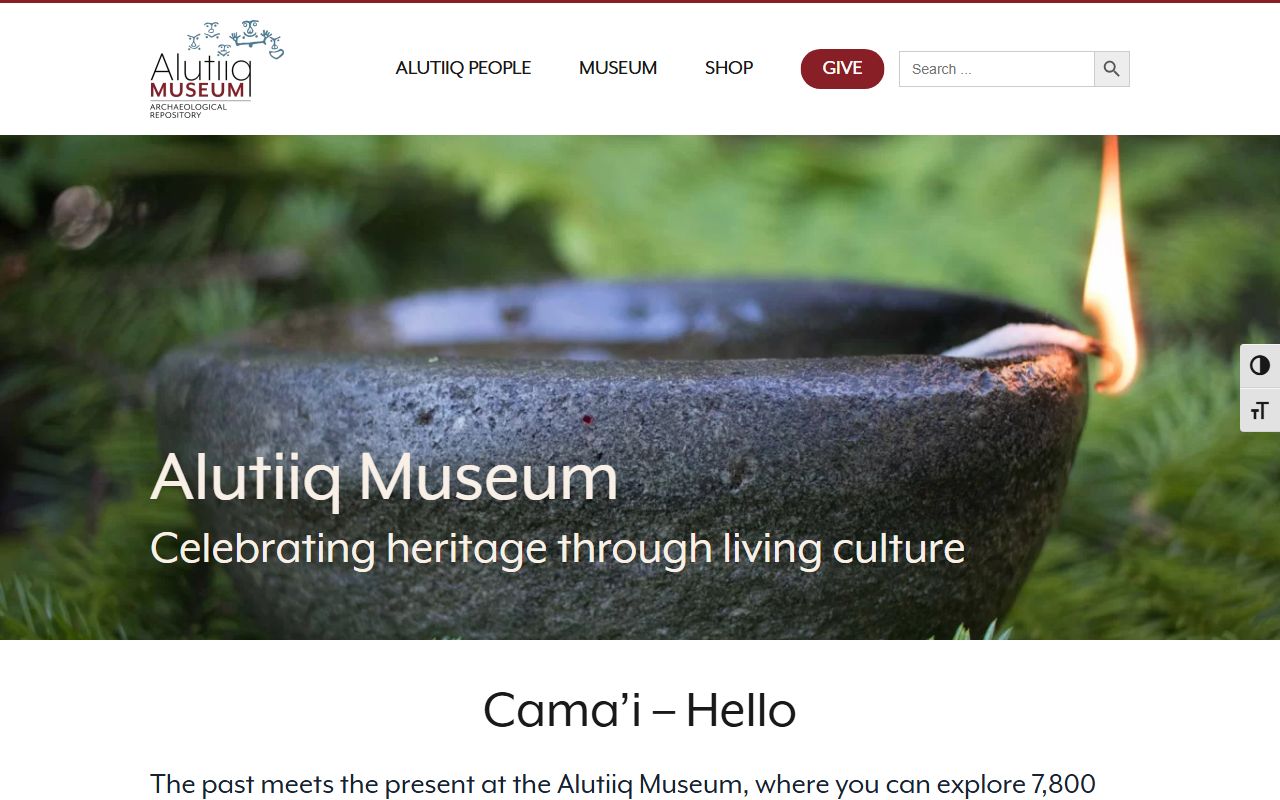
The museum's collections go well beyond what state records capture, particularly for historical deaths and family connections that predate the formal Alaska vital records system. Contacting them directly is often the most efficient way to learn what they hold.
Russian Orthodox Church Records
The Russian Orthodox Church had a significant presence on Kodiak Island starting in the late 1700s. Mission records from that era often included births, deaths, and marriages in the local communities. Many of those records survived and have been digitized by FamilySearch and other organizations. They are among the oldest systematic vital records for any Alaska community.
FamilySearch has an Alaska Vital Records collection that includes some Kodiak area records, and their general Alaska genealogy resources can help you navigate what is available. Russian Orthodox Church records can be particularly valuable for families with deep roots on Kodiak Island, as they may document deaths that predate any American record-keeping system by a century or more.
Church records of this type are often organized by parish rather than by individual name, so you may need to know which parish a family belonged to in order to find the relevant records. The Alutiiq Museum may be able to help identify which parish served a particular family or community, since they have broad knowledge of Kodiak's historical geography and settlement patterns.
Kodiak Island Borough Property and Estate Records
The Kodiak Island Borough provides planning, zoning, and property assessment services across the island. Their main office is at 710 Mill Bay Road, Kodiak AK 99615, phone (907) 486-9310. The borough maintains an online property search and GIS mapping system that is useful for estate research when a death triggers a property transfer.
The Kodiak Island Borough website provides access to property records and GIS mapping for the entire island. The screenshot below shows the borough's site, where you can search property records by owner name or parcel number to track ownership history relevant to estate research.
Property records from the borough can help confirm when an estate was settled or when property changed hands after a death, which is sometimes useful for establishing timelines in family research.
When someone dies on Kodiak Island and owns real property, the estate must go through some form of settlement process before the property can be transferred. For significant estates, this involves probate proceedings in the Alaska court system. Probate records are court records and are generally public. The Alaska Court System maintains online case records that can be searched by name, which is useful if you know someone died in the Kodiak area and owned property. The court system website is the place to search for any probate filings associated with a Kodiak Island estate.
Alaska State Archives for Kodiak Research
The Alaska State Archives in Juneau holds territorial and early statehood records that predate the modern HAVRS system. For deaths that occurred on Kodiak Island in the first half of the 20th century or earlier, the Archives may hold records that HAVRS does not. Their genealogy portal describes the collections and how to access them. You can review what is available at the Alaska State Archives genealogy page.
The Archives holds a range of record types beyond vital records, including court records, administrative files, and agency correspondence. Deaths that were investigated by territorial authorities, involved the courts, or were connected to government programs may be documented in multiple record series. Researchers who exhaust the obvious vital records sources sometimes find useful information in court or administrative files.
The Alaska State Library's genealogy guide at the library genealogy page provides an overview of all major record sources for Alaska research. It covers vital records, census records, military records, and historical documents, and it notes where online access is available versus what requires a visit or mail request.
The CDC's where-to-write resource for Alaska is at the CDC Alaska page. It confirms the HAVRS contact details and describes the general process for ordering Alaska vital records. If you are helping a family member in another state understand how to get a Kodiak death certificate, the CDC page provides a clear summary they can read on their own.
How to Order a Kodiak Death Certificate
The most direct way to order a Kodiak death certificate is through the HAVRS ordering system. You can go online via VitalChek or mail your request to the Juneau office. Either way, you fill out a request form identifying the deceased by full name and date of death, specify how many copies you need, and provide proof of your eligibility if the death was within the last 50 years.
For online orders, go to VitalChek's Alaska page and follow the prompts. You will need to upload a copy of your photo ID and any eligibility documentation. For mail orders, download the form from the HAVRS orders page, complete it, and mail it with a check or money order and copies of your ID and documentation to 5441 Commercial Boulevard, Juneau AK 99801.
HAVRS staff can be reached at (907) 465-3391 in Juneau or (907) 269-0991 in Anchorage. They can confirm whether a record is on file and what documentation you need. For Kodiak-specific questions about historical records, Alutiiq heritage records, or Russian Orthodox church records, the Alutiiq Museum at their website is a better contact than HAVRS.