
Kalifornsky Death Records Lookup
Kalifornsky is a census-designated place in the Kenai Peninsula Borough, and death index records for this community are filed through the Alaska Health Analytics and Vital Records Section. Researchers, family members, and legal professionals can request death certificates through HAVRS, with additional historical records available through FamilySearch, the State Archives, and regional newspaper collections.
Kalifornsky Death Index
Vital Records for Kalifornsky
Kalifornsky does not have its own municipal government. The community lies south of Soldotna along the Kenai Peninsula, and the Kenai Peninsula Borough provides local services including property assessment and land use planning. When it comes to death certificates, though, those are a state responsibility in Alaska. No borough office in Soldotna or elsewhere can issue them. The sole issuing authority is HAVRS.
A death in Kalifornsky triggers a standard state process. The attending physician, coroner, or medical examiner prepares and signs the death certificate. The document goes to HAVRS for registration. Once registered, it becomes part of the statewide death index. The certificate includes the full legal name of the deceased, date and place of death, cause and manner of death, and relevant family details. This is the official record of the event.
Alaska restricts access to death certificates less than 50 years old. Eligible requesters include immediate family members, legal representatives, and people with a documented personal or property interest. Records 50 years old or older are open to anyone. As of 2026, that means deaths from 1976 and before are publicly accessible without needing to prove a family connection.
Requesting Records Through HAVRS
HAVRS has two locations. The main office is at 5441 Commercial Boulevard, Juneau AK 99801, phone (907) 465-3391. The Anchorage office is at 3901 Old Seward Highway, Suite 101, phone (907) 269-0991. Both offices can handle requests for Kenai Peninsula death records, including those from the Kalifornsky area.
Online ordering is available through the state's VitalChek partnership. You can also mail a completed request form with payment. The fee is $30 for the first certified copy and $25 for each additional copy requested at the same time. You will need to provide the full legal name of the deceased, approximate date of death, and documentation of your eligibility if the record is within the 50-year restricted period.
The HAVRS vital records ordering portal is the official gateway for death certificate requests covering Kenai Peninsula communities including Kalifornsky.
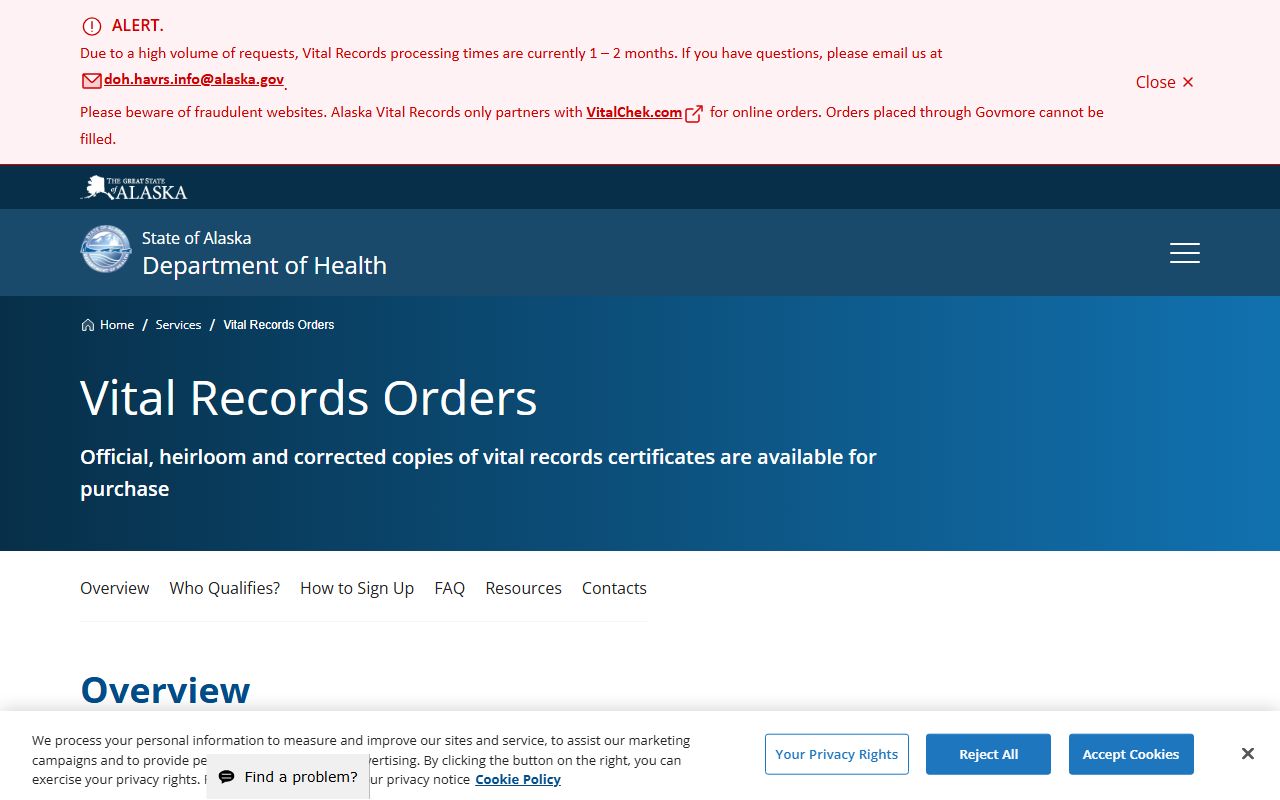
The ordering page also lists acceptable forms of identification and explains how to request expedited processing if needed.
For those who prefer to visit in person, the Anchorage office is the more practical option for Kenai Peninsula residents. Walk-in service is available, though appointments may reduce wait times. Calling ahead to confirm current hours and availability is a good idea before making the trip from Soldotna or the surrounding Kalifornsky area.
Kenai Peninsula Borough and Local Services
The Kenai Peninsula Borough offices are at 144 North Binkley Street, Soldotna AK 99669. The borough's assessing department maintains property records for the Kalifornsky area, and these can be useful during estate research. If the deceased owned land in the area, the borough's online property search can show ownership history, parcel details, and assessed values.
The Kenai Peninsula Borough provides local government services for the Kalifornsky area, including property records that can support estate and genealogical research.
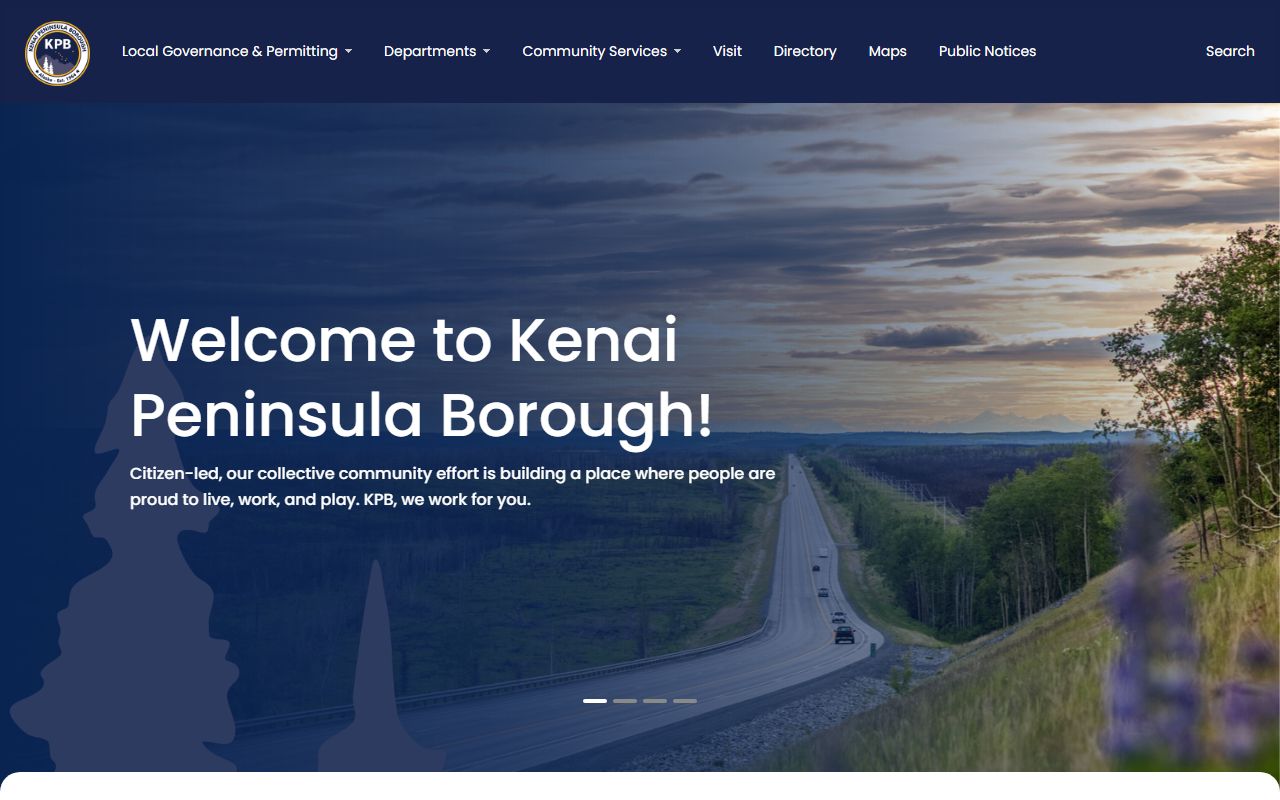
Property transfer records and ownership histories in the borough's database can help researchers trace family members who held land in the Kalifornsky area over multiple generations.
Probate matters for Kenai Peninsula decedents go through the Kenai Superior Court. That court handles wills, estate administration, and related proceedings. Probate filings are public record once filed with the court, so they can provide additional details about a deceased person's assets and family members. Researchers who need probate information should contact the Kenai Superior Court clerk's office directly.
Historical Records and FamilySearch
The Kenai Peninsula has a long documented history that predates Alaska statehood. Russian Orthodox missionaries and traders were active on the peninsula in the 19th century, and the community of Kalifornsky itself takes its name from a Russian Orthodox priest who served the area during that era. This history means some of the oldest records for the region come from church sources rather than government offices.
FamilySearch holds digitized records for the Kenai Peninsula that include death records from 1914 through 1986 under the Kenai Death Records collection. There are also Kenai Peninsula Coroner's Records covering 1900 through 1959. These collections are available online and free to search. They are especially useful for researchers looking at deaths that occurred before the modern vital registration system was well established in Alaska.
The Alaska State Archives in Juneau holds territorial-era records that can fill gaps for the peninsula region. Their genealogy collection covers a range of record types and time periods. For research into pre-statehood deaths in the Kalifornsky area, the Archives is worth contacting to ask what specific collections might apply.
The CDC Alaska vital statistics page provides context on how Alaska vital records are organized at the national level. The Alaska State Library genealogy resources page lists digital collections and research guides that can help narrow down sources for Kenai Peninsula deaths.
Newspapers and Secondary Sources
Obituaries are a key secondary source for death research in the Kalifornsky area. The Homer News covers the southern Kenai Peninsula and publishes obituaries for community members from Homer, Anchor Point, and surrounding areas. Issues going back years are available in print archives and some are accessible online. The Peninsula Clarion, based in Kenai and Soldotna, is another regional paper with a long history of covering Kenai Peninsula communities including Kalifornsky.
These newspaper obituaries often contain details not found in official records. They may list surviving children and grandchildren by name, note the deceased's occupation or church affiliation, and give the date and location of memorial services. For genealogists, this information can open up new lines of research and help fill in family trees.
Social Security Death Index data is also searchable through genealogy platforms and can confirm dates of death for individuals who paid into the Social Security system. This index does not cover everyone, but it is a useful check when you have a name and approximate time period. Military records are another avenue worth exploring if the deceased served in the armed forces, since service and discharge documents can confirm dates and locations.
Alaska's Vital Statistics Act under Title 18, Chapter 50 sets out the legal framework for how death certificates are created, maintained, and accessed in the state. Knowing this framework helps researchers understand what information a certificate must contain and what the rules are for obtaining copies of restricted records.
Estate Research and Supporting Documents
A death certificate is often just the starting point for legal and estate work. Families dealing with a recent death in Kalifornsky may need to gather several other documents. The probate court will want the death certificate as part of the estate filing. Title companies may require it when transferring real property. Banks and financial institutions use it to close accounts and transfer funds to beneficiaries.
In Alaska, the surviving spouse or next of kin typically leads the estate process. If the deceased left a will, it must be filed with the Superior Court. If there was no will, the court applies intestacy rules to distribute assets. Either way, the death certificate is the document that starts the formal process. Getting certified copies early, and ordering extras, saves time later when multiple agencies all ask for the same paperwork.
Veterans who die in Alaska may be eligible for special death certificate recognition through state legislation. Families of qualifying veterans should ask HAVRS staff about current programs at the time of the request. This can be a meaningful supplement to the standard death certificate for families with military connections in the Kalifornsky area.